
On Wednesday, April 18, 2018 Vandra Thorburn was a presenter on a Webinar: “Using Bokashi in Community Composting — What, Why, How, Who” hosted by Brenda Platt the Co-Director of the Institute for Local Self-Reliance and heads up its Composting for Community project. The entire webinar was more than an hour and a half and for our convenience we’ve included a transcript (below) and video excerpt (above) of her section of the webinar
TRANSCRIPT (edited)
Brenda: We have one more speaker and I’m so pleased to introduce Vandra Thorburn with Vokashi again in New York City. Vandra is going to share the value of pit and trench composting that she’s using and how she’s using fermented food scraps to take the Yuk out of recycling food waste. So, Vandra, all yours!
Vandra: “Hello there, thank you very much.
I’d like to review some of the things that i’d like to go over:
- The natural growth of Bokashi, which I think is terrific
- My Preference for EM-1
- Some recommendations of my service
- The development of our composting methods
- The need to advocate more and more for Bokashi as a way of handling our food scraps”
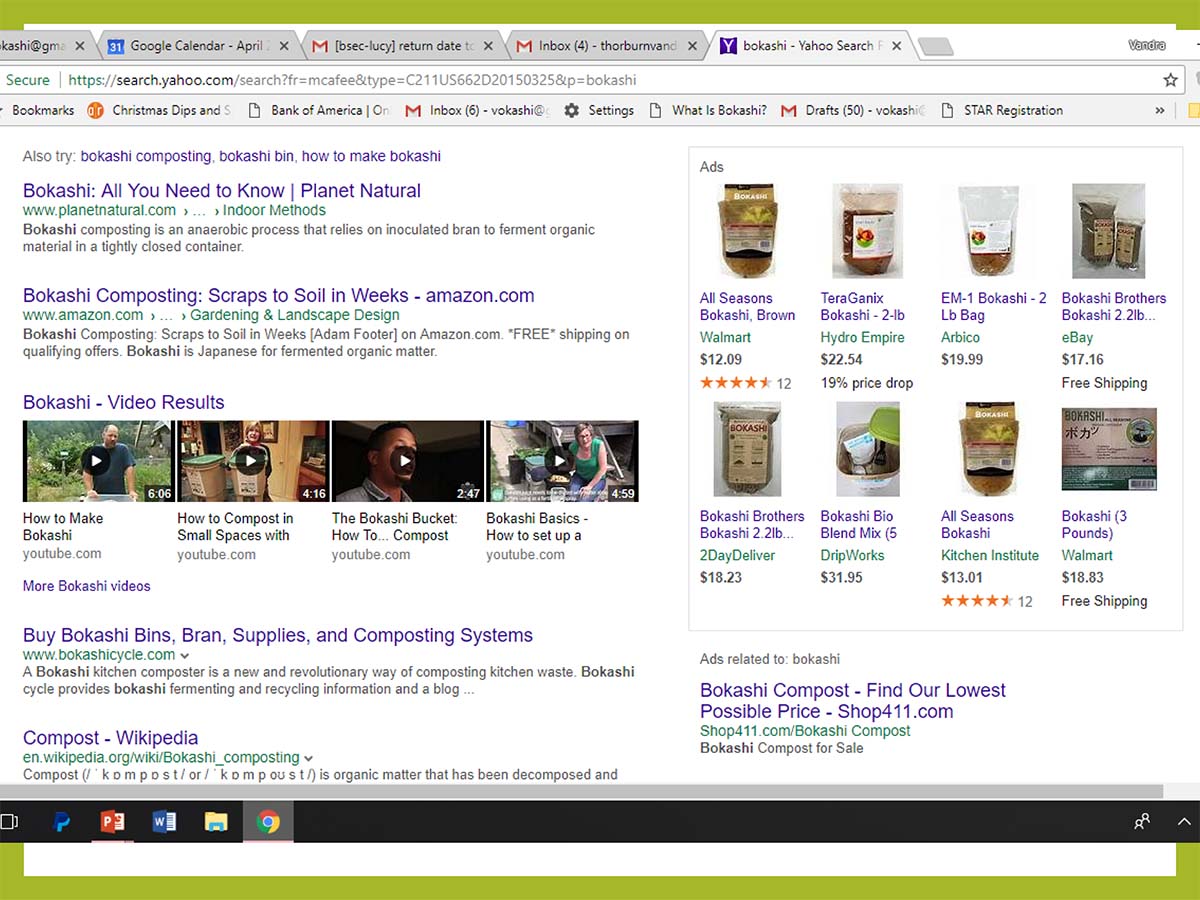
Vandra: “If you just do a quick Google of “Bokashi” you’ll see pages and pages of Bokashi coming up which I think is really, really important. I’ve been beating the bush for Bokashi for a number of years and I want to see us, particularly in the in the botanical world and in urban composting areas, to really pay more attention to the work that we are all doing.” Next Slide…
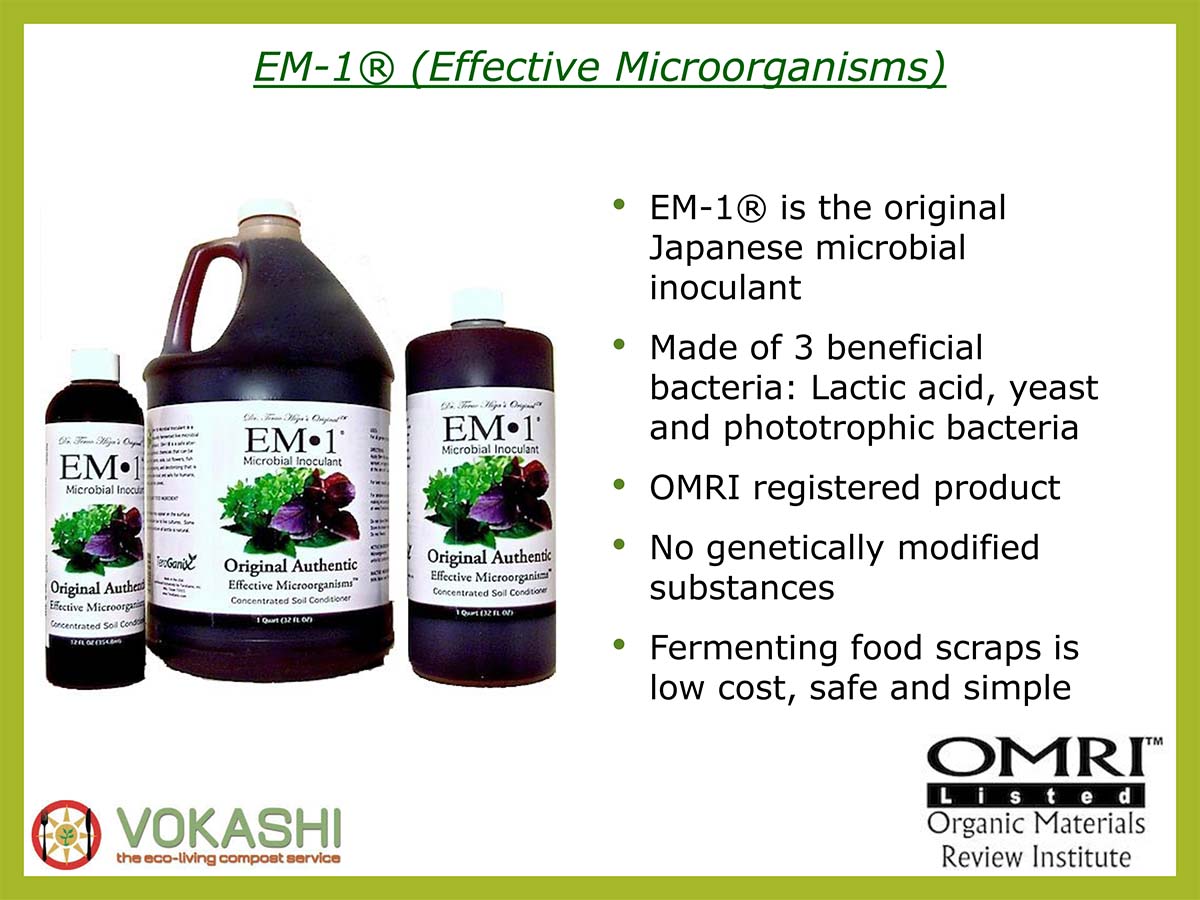
Vandra: “My preference is of course for EM-1 which is the original microbial inoculant and there are a number of other inoculants that are coming out to the market. And there is actually a natural combination of microorganisms referred to sometimes as indigenous microorganisms which I’ve heard tell of. ” Next Slide…
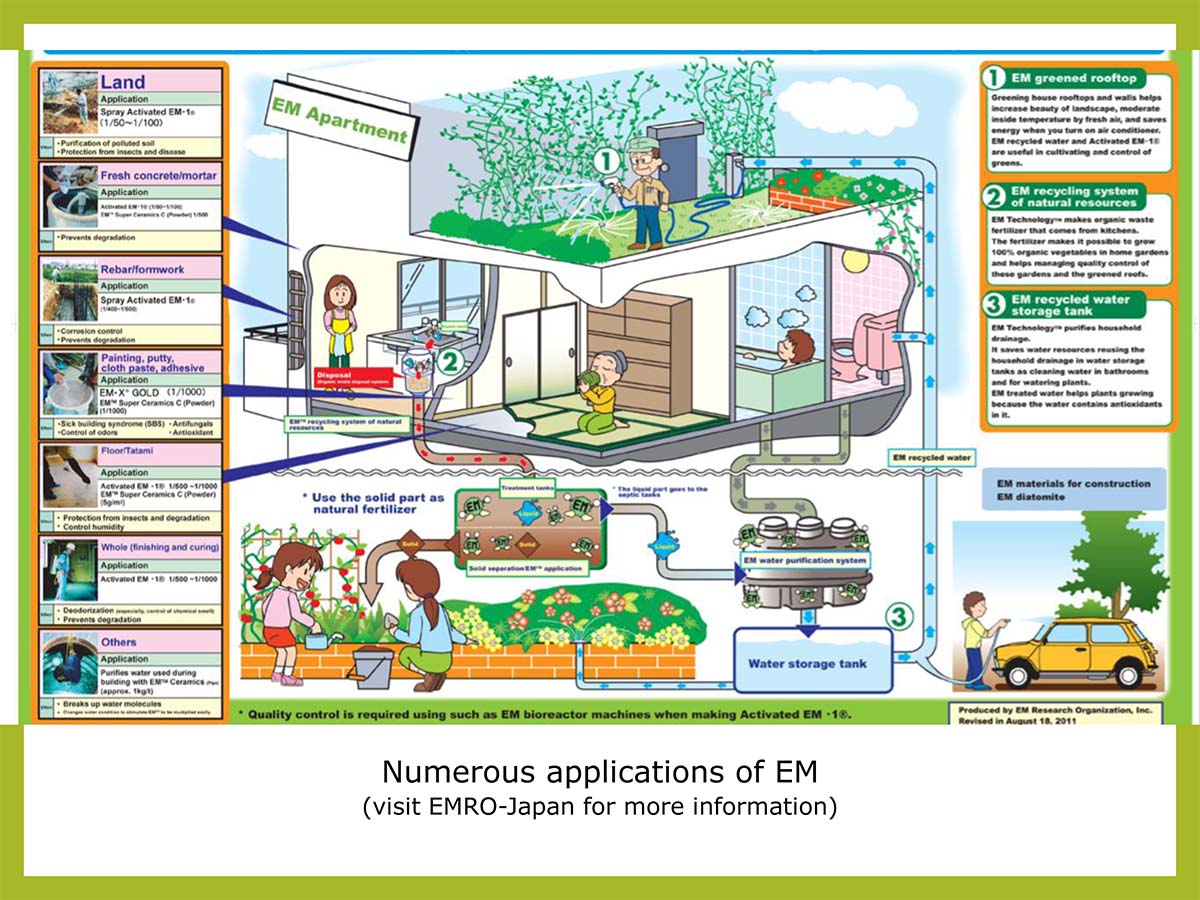
Vandra: “And here is from EM Japan, EMRO, a wonderful cartoon of the many, many ways EM is applied: from cleaning your car to watering your flowers. ” Next Slide…
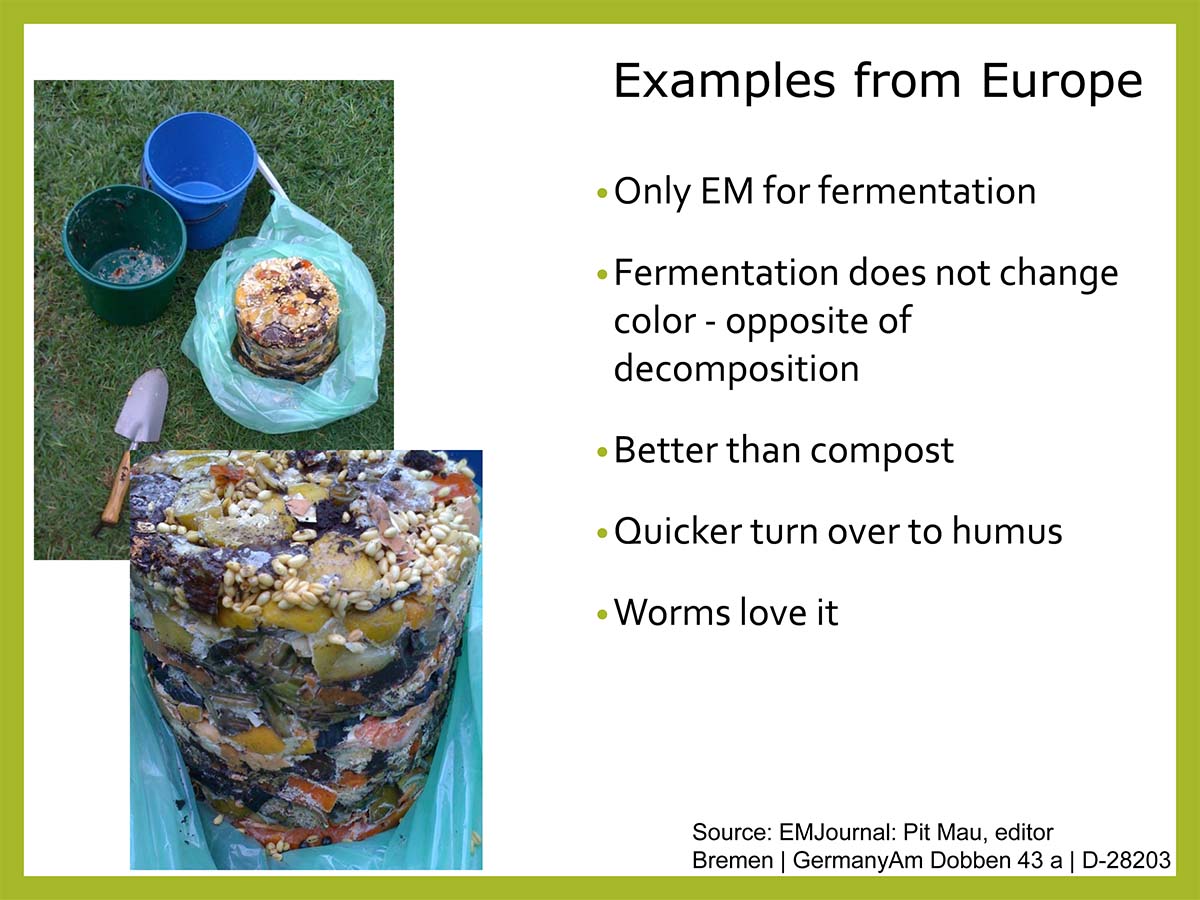
Vandra: “There are thousands of Bokashi stories and I’d like to flip through some of the examples. In Europe, this is a wonderful EM Journal which is put out by Pit Mau, in Bremen Germany and it would be great to have this kind of presence in America too. ” Next Slide…
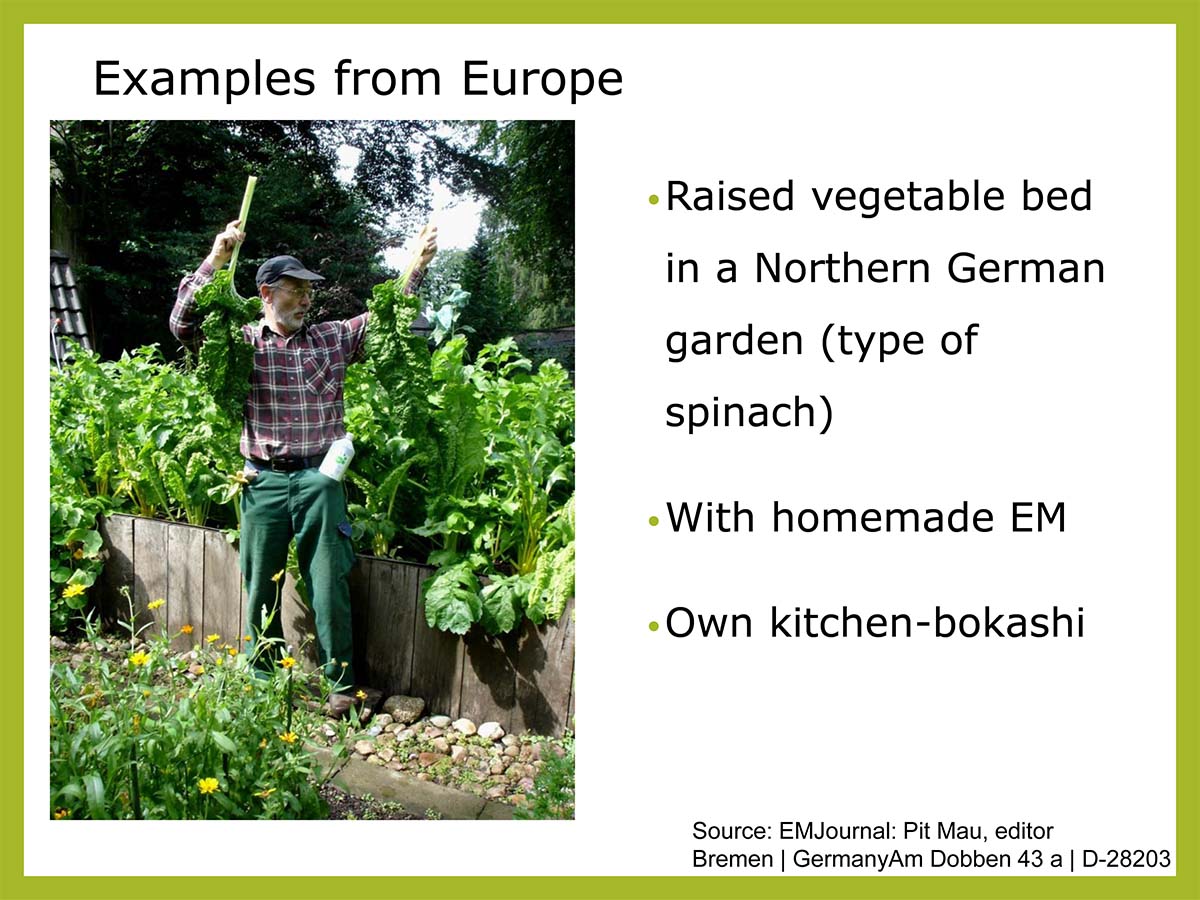
Vandra: “This man is very proud of his spinach which he has grown with his homemade EM and you can see those spinaches look like trees.” Next Slide…

Vandra: “Another example of people using the leachate–creating a leachate from their Bokashi.” Next Slide…
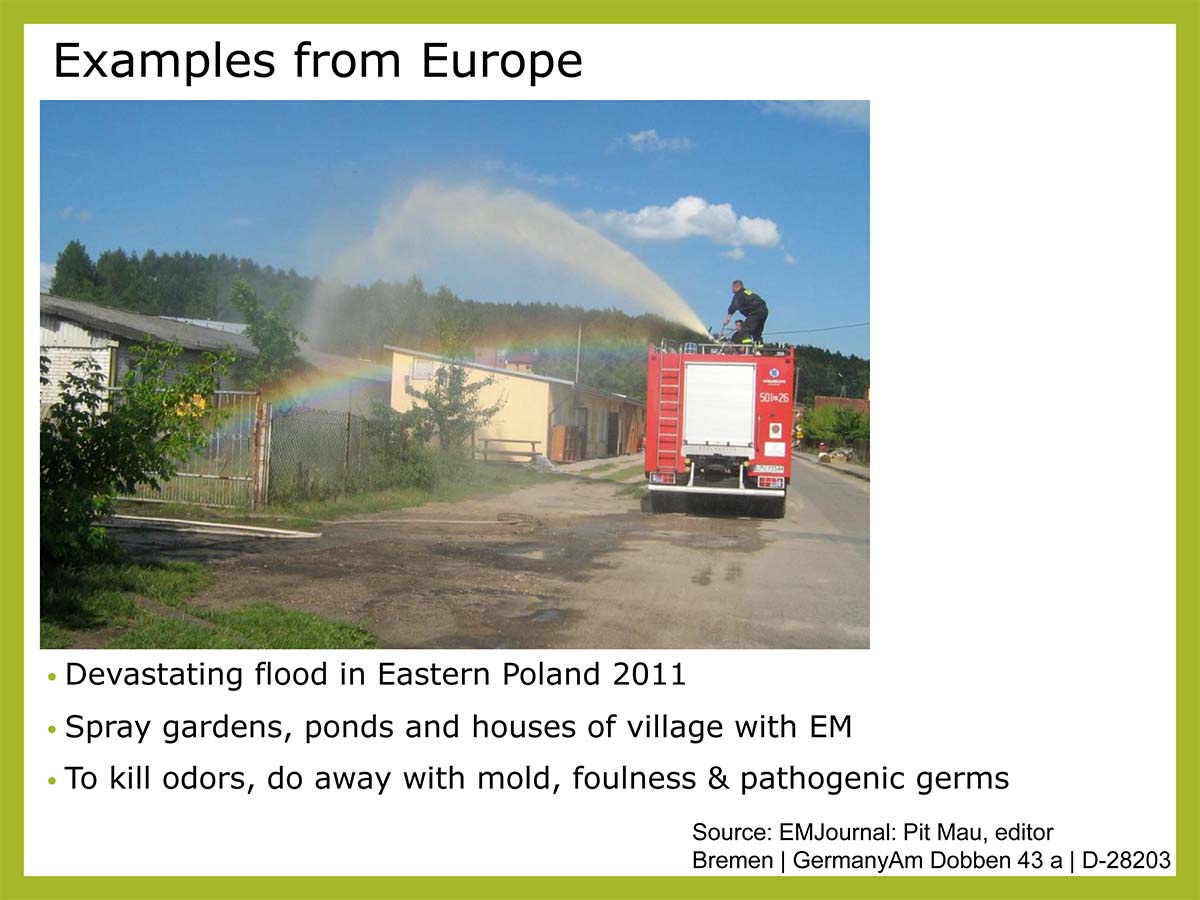
Vandra: “And finally this example of using activated EM, which is being sprayed out of the fire engine, and it can be used for handling molds, fungus and other pathogenic germs. ” Next Slide…
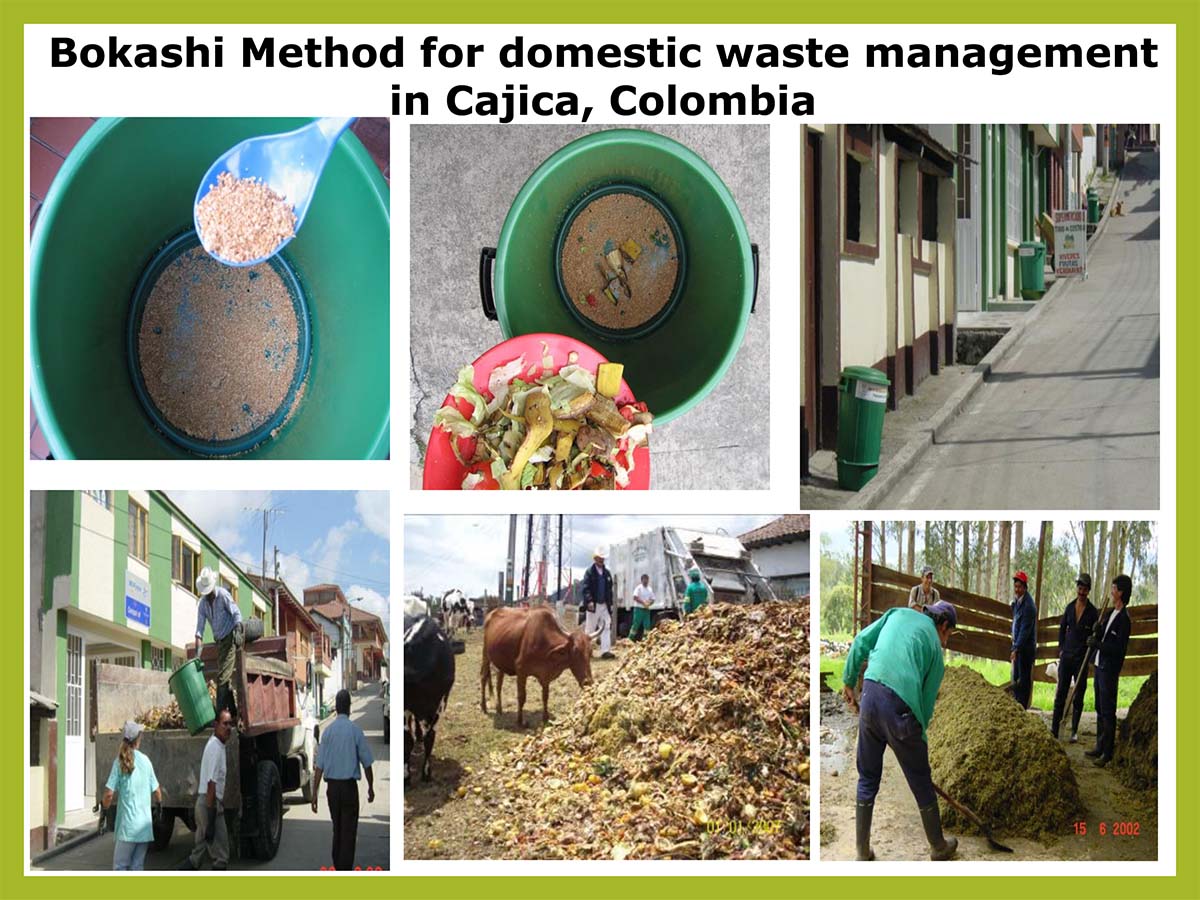
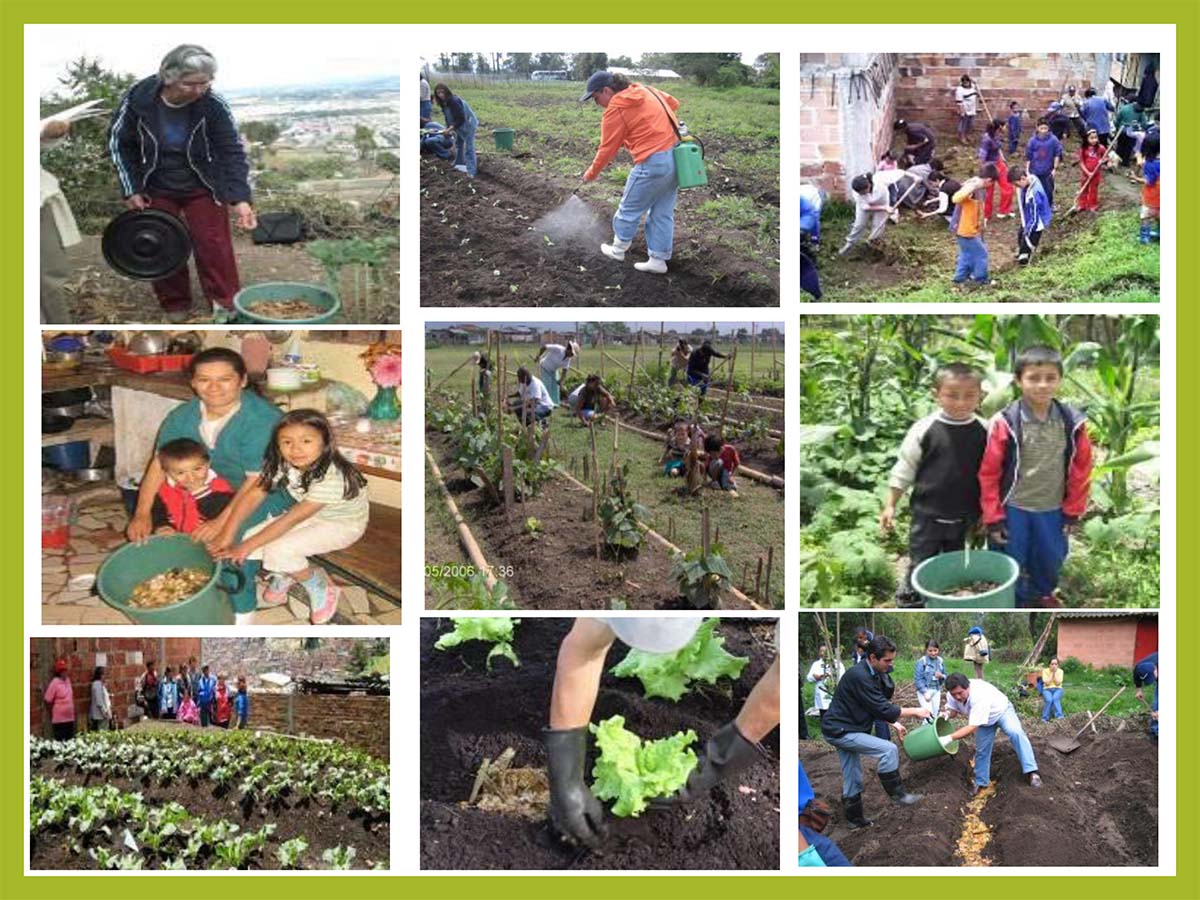
Vandra: “Here are some examples of Bokashi from Cajica, Columbia. ” Next Slide…
Vandra: “In 2009 when I started thinking about a compost collection service–which I thought about because–500 people where walking their food scraps down to the market in Ft. Greene, in Brooklyn, and I thought that surely some of those people would like to have someone help them manage their food scraps. However, I also knew that I did not want to manage rotting food. So I had to figure out where else to go and that’s how I happened upon, of course, Bokashi on the internet.” Next Slide…

Vandra: “I was eager to start a business and to find a name so I coined Vokashi, the method and Vokashi the service. At that time in 2009 is when I met up with Shig Matsukawa who certainly mentored me through the first couple of years–because we were all nervous about whether this method would really work in an urban environment. And, indeed it does, particularly around the issue of trenching.” Next Slide…
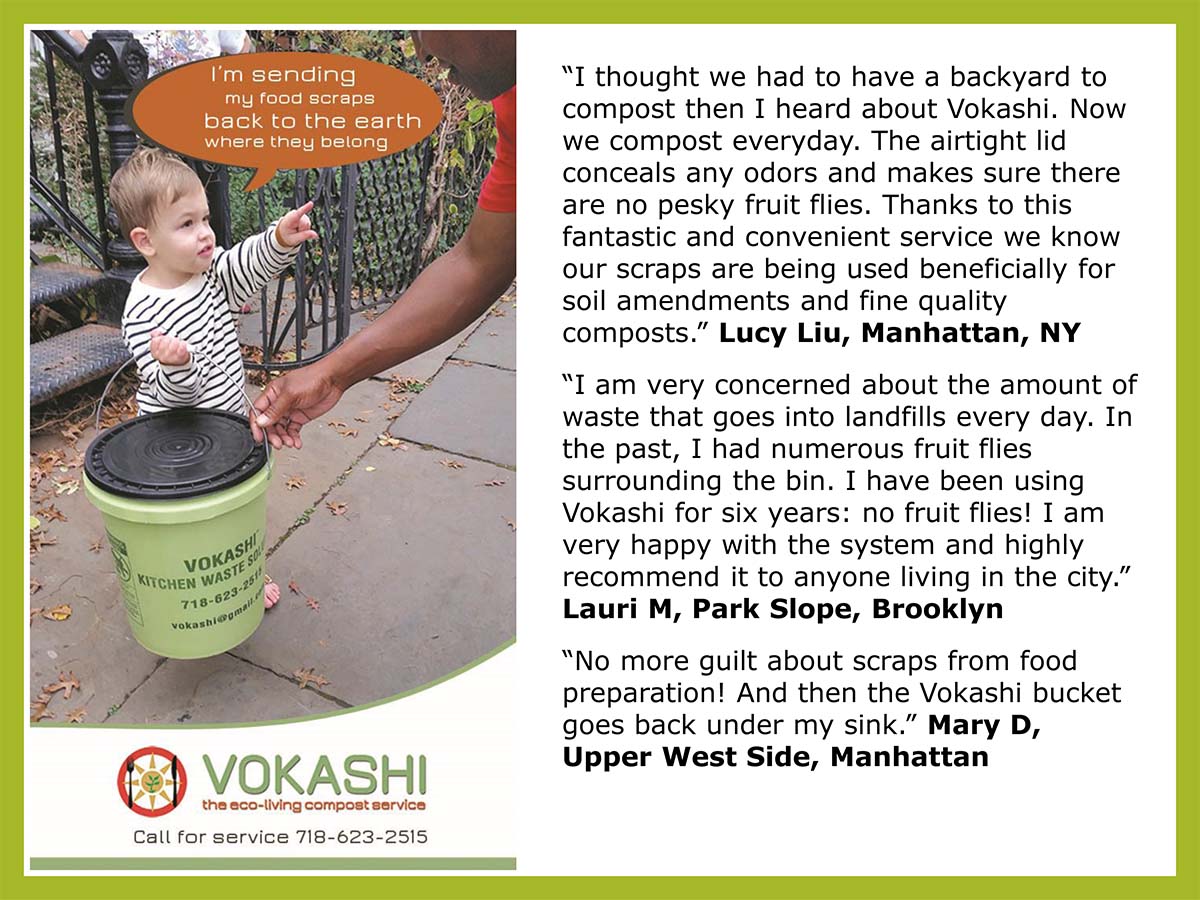
Vandra: “So, over the last eight or nine years I’ve built up a business of households and I have one celebrity at the moment, Lucy Liu. ” Next Slide…
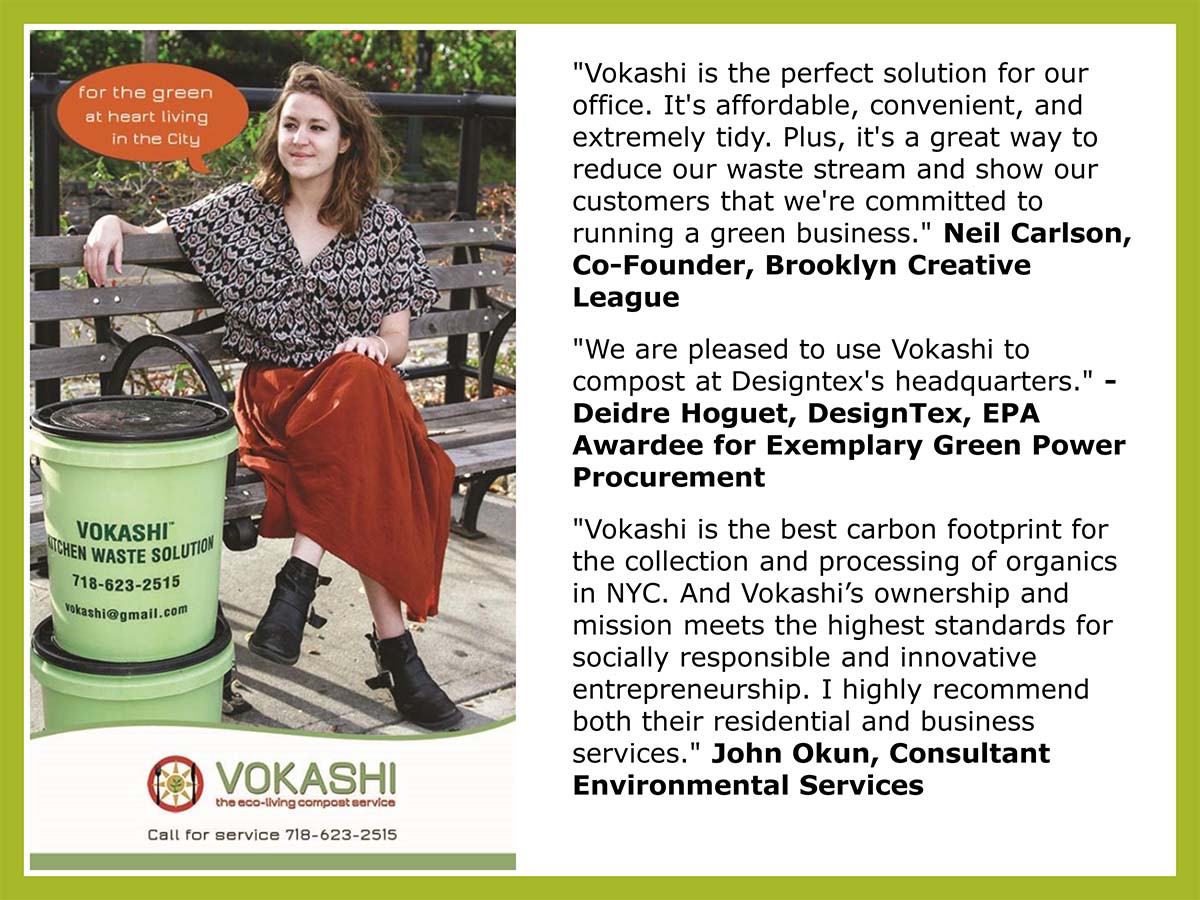
Vandra: “And, some comments from some of my business clients and I have two anchor business clients one is the EPA and then I’m servicing a large commercial real estate building where there are 150 offices and in many of those offices many of them have our buckets and we are collecting from them once per week. So that’s our sort of front-end service: we provide the buckets, we provide the bran, and people just fill up the buckets. Some customers are going to be adding bran as they go along. Some are not. We don’t worry that much about that. We’re not sticklers about making sure everybody adds the bran. I really appreciate Benny Erez showing us how we make the bran. I haven’t shown those pictures but hat is sort of how I make my bran too. Then either once per month or weekly, depending on the volume we come through and we collect.” Next Slide…
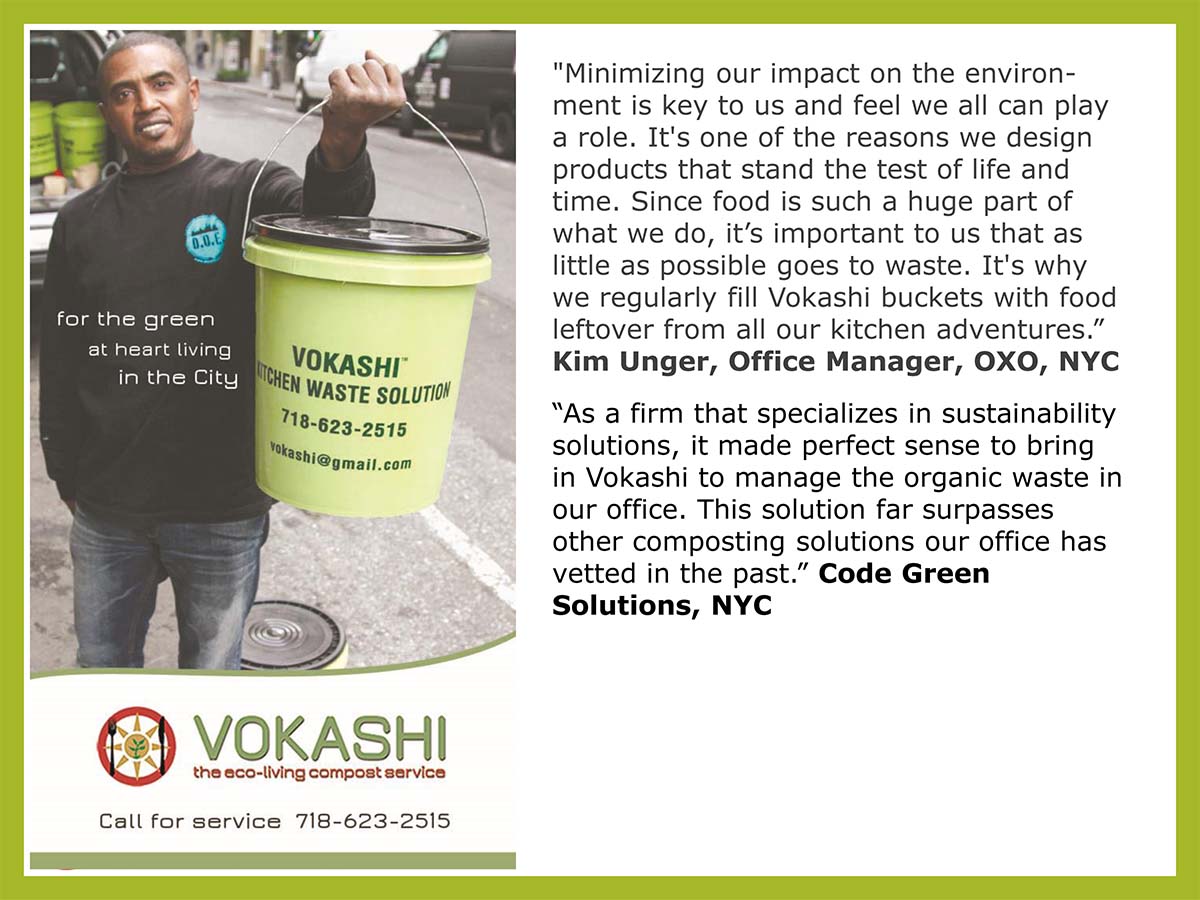
Vandra: “We take your food scraps back to the earth where they belong, as it were. This is pretty much what the site looks like now. With less people and it is not as green (in the early Spring). ” Next Slide…
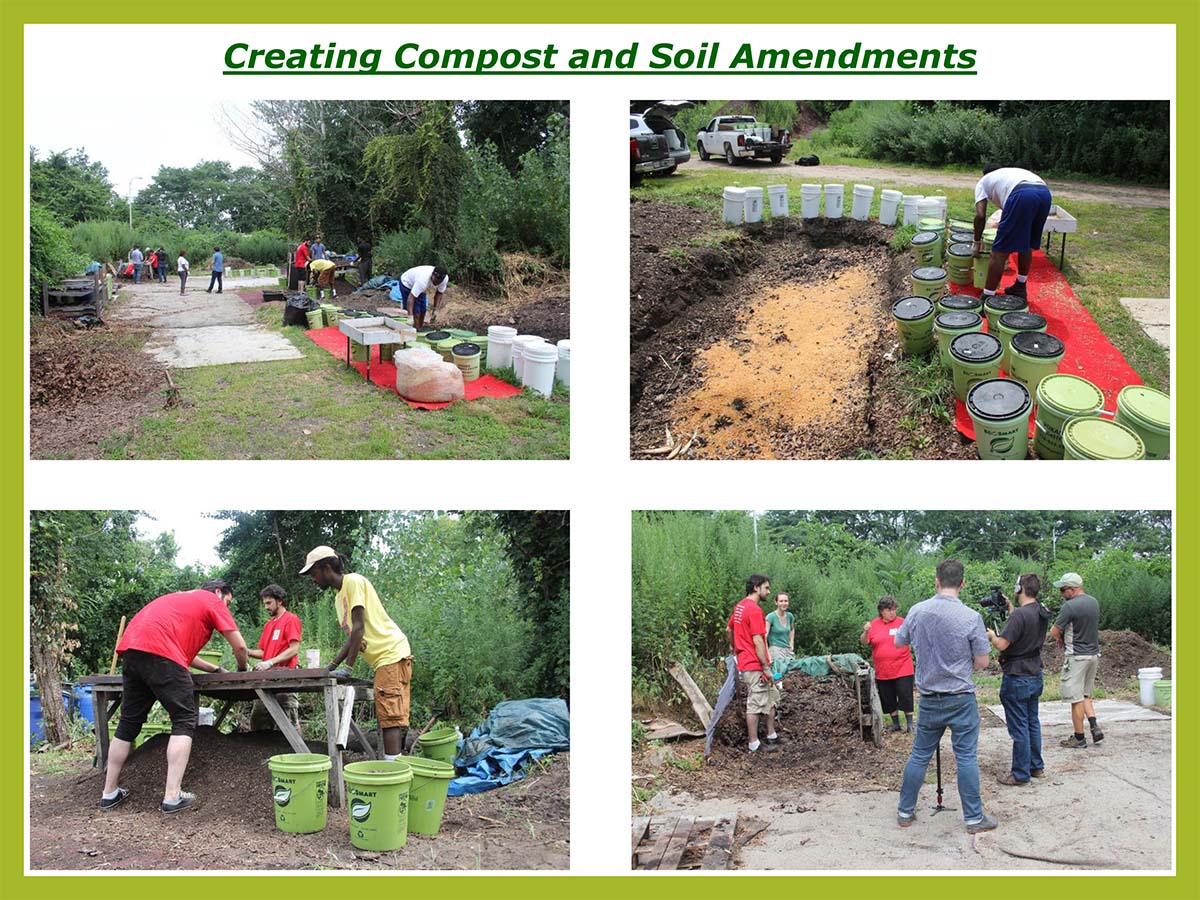
Vandra: “We started much smaller and we’ve been essentially demonstrating two or three of the composting methods. And I call it Trench Composting when it a small little trench. Then we can use our fermented food waste to add to traditional methods of composting. And what I’m demonstrating now is Pit Composting. Pit Composting really is to go down seven, eight, ten feet deep by 20 feet long and five feet wide. And a ten foot deep pit can actually take between three and four tons of fermented food waste. And just really let the worms do the work. We leave that pit for seven, eight months. We’re not trying to accelerate any of the composting so we just leave it. ” Next Slide…

Vandra: “Here’s a Trench Composting in a small garden. ” Next Slide…

Vandra: “Then we went to a larger community garden where we were mixing our food waste buckets with the yard waste.” Next Slide…
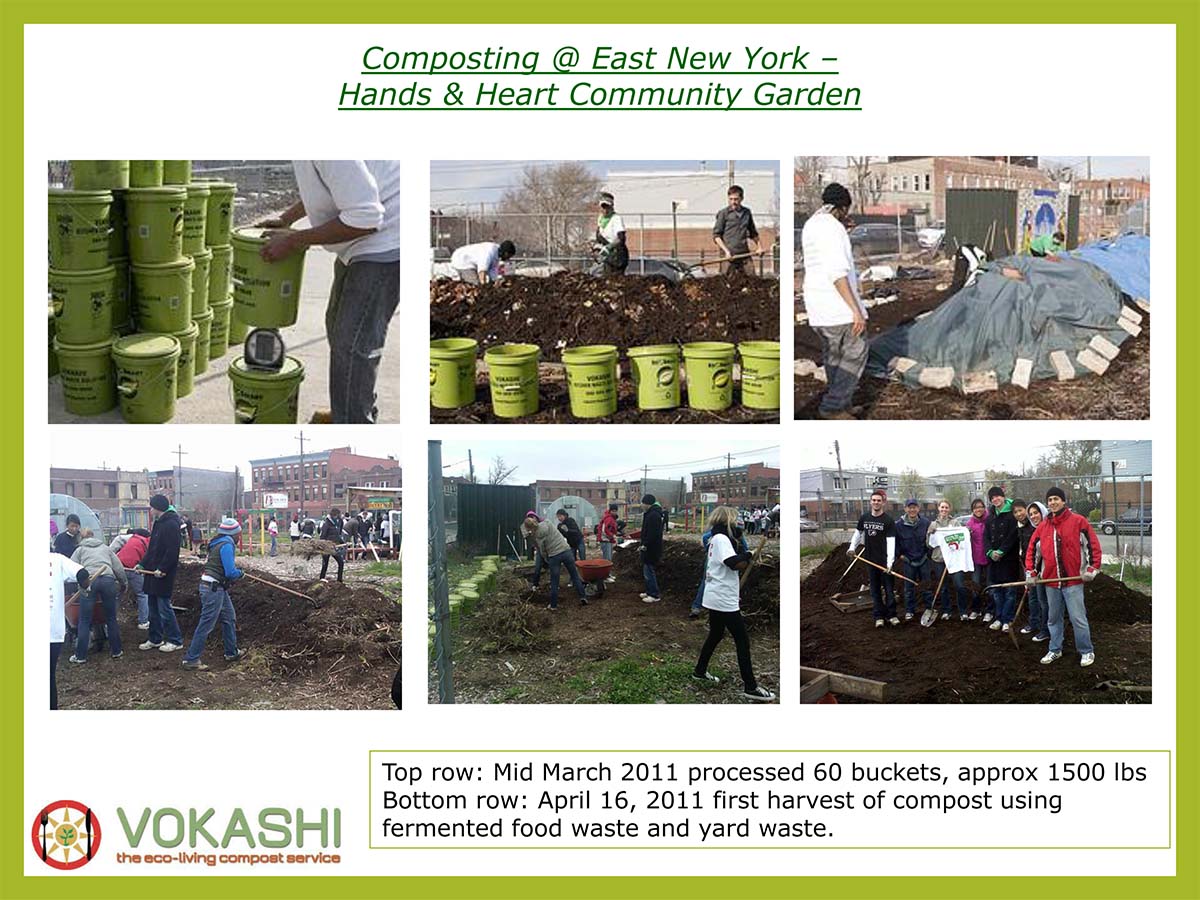
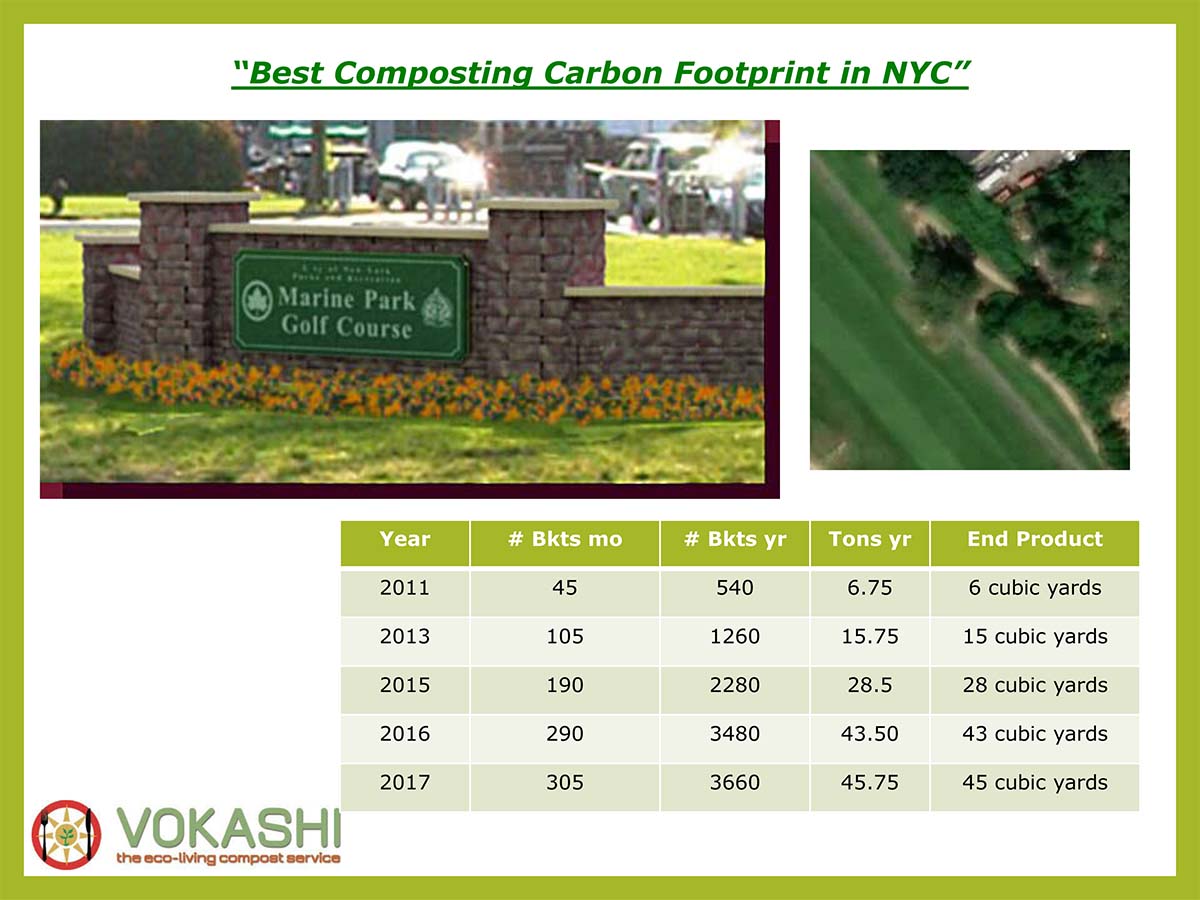
Vandra: “And then we got this offer at the end of December in 2011 from Marine Park Golf Course. And they were looking for compost and I said I didn’t have any but that I would make some for them. And they have actually been the place for us to really grow and experiment. So we experimented with these little above ground trenches.” Next Slide…
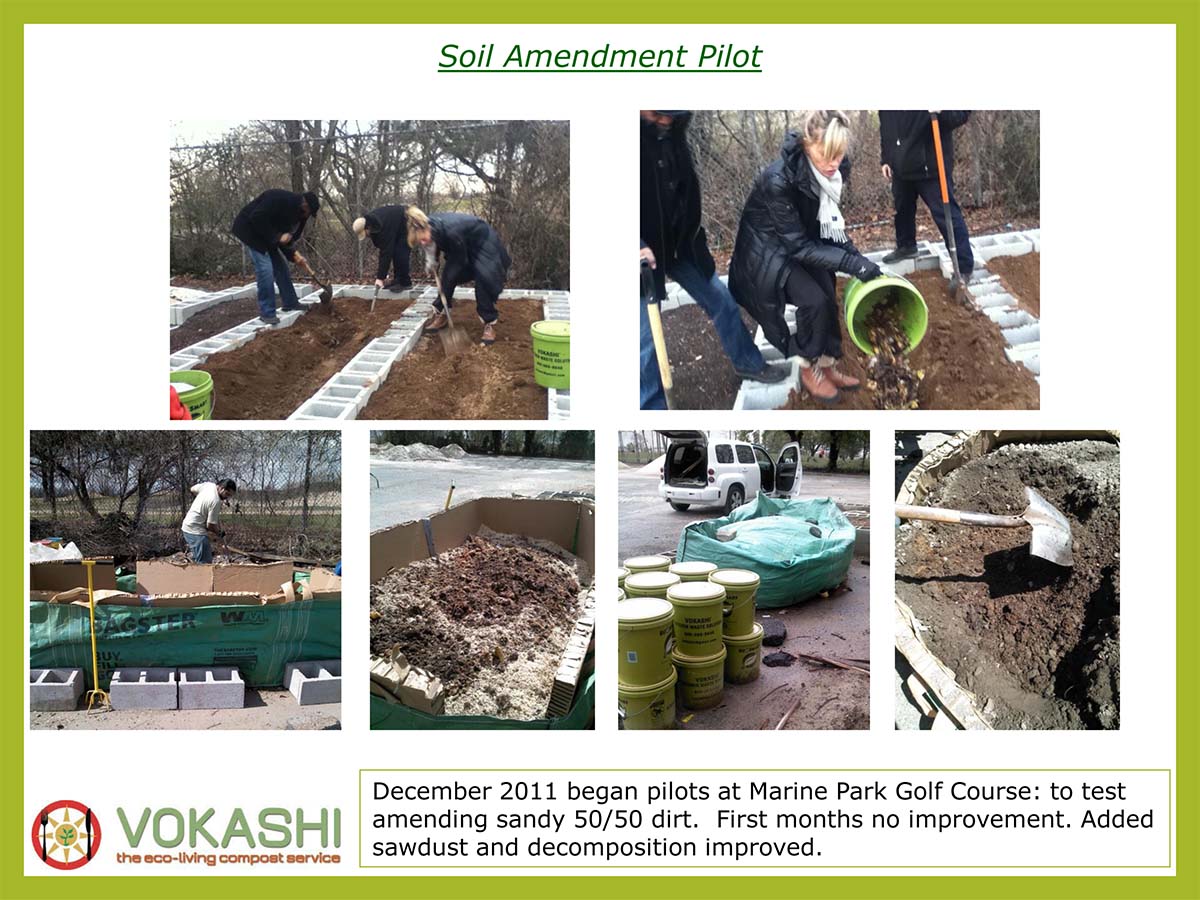
Vandra: “And making all of these little wooden frames and using bags of whatever was at the top of my mind at that moment to process the food scraps. In addition to which I was meeting with people from Brooklyn College so a young intern was interested in doing a little experiment. So we setup a little experiment to see what the ratio of fermented food waste to soils or yard waste would be.” Next Slide…

Vandra: “It was a sweet little project and the intern got an award which was lovely. And a little bit of a prize. So just to say how much space potential there is for doing research using Bokashi.” Next Slide…

Here is the Research Study and Results” Next Slide…
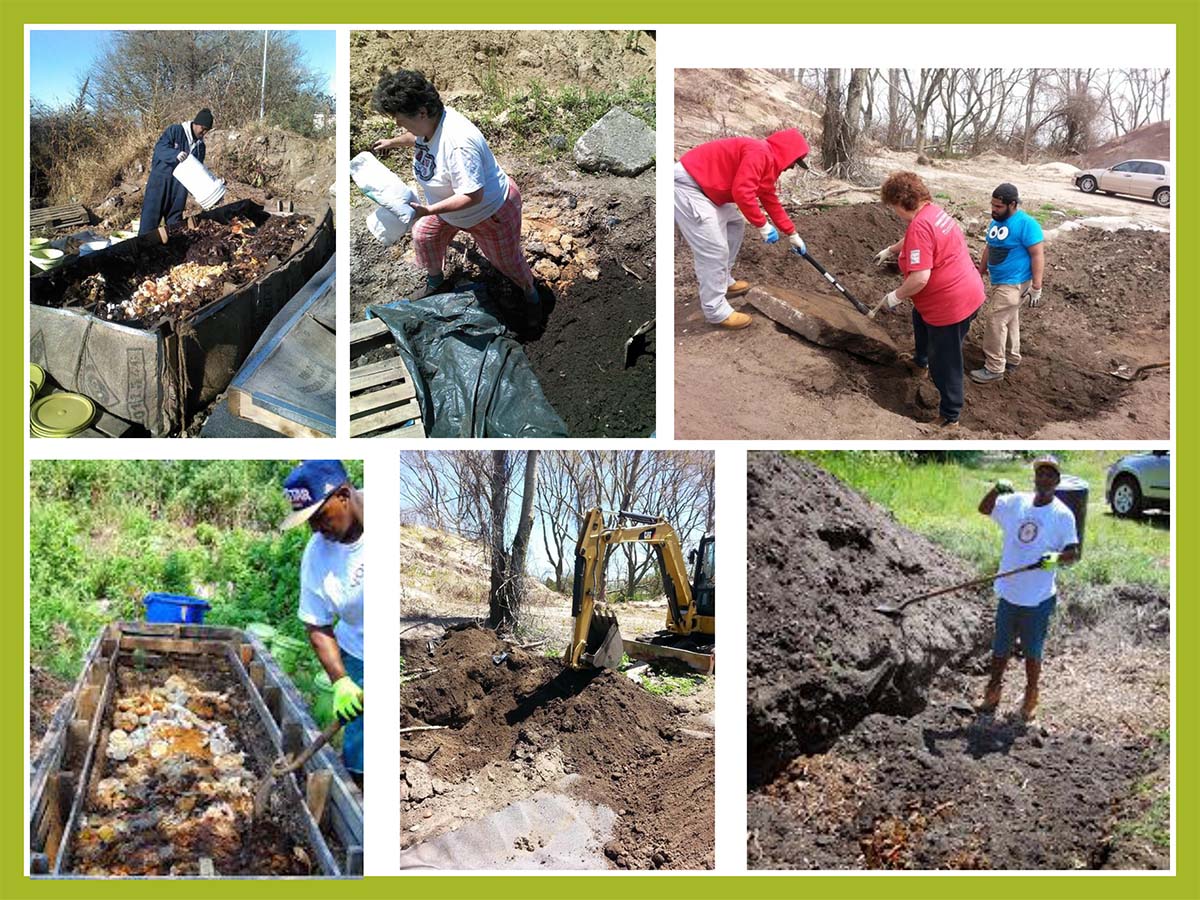
Vandra: “So then for the next couple of years it’s all about figuring how to get from above-ground composting to below-ground. Just going from trenches and trenching it to digging deeper and this is where being at the golf course we have the help of the backhoe to dig a big trench and then we can just layer up our food waste. We put sawdust and food waste and sawdust. ” Next Slide…

Vandra: “Once the food waste and sawdust has settled a bit we then have that backhoe come in and excavate it and he’ll put it onto that pile (on the bottom left)–that’s a pile of the material that has come out of the pit and then it will sit there for another 6-8 weeks before we will sift it. And give that to the golf course. So all of the compost that we make is used by the golf course and is essentially used by their ornamental gardens.” Next Slide…
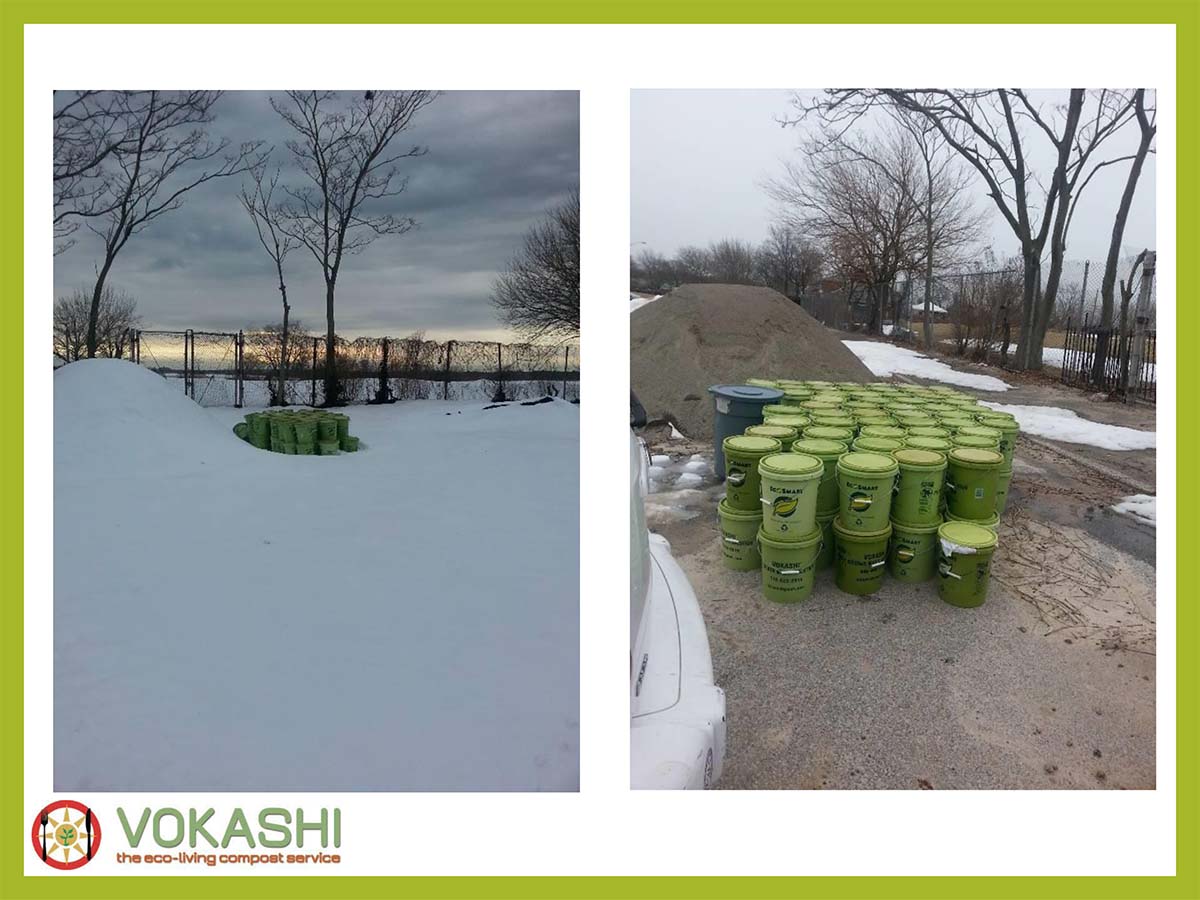
Vandra: “And the other nice thing about Bokashi is that you can put it into a bucket and set it aside.” Next Slide…
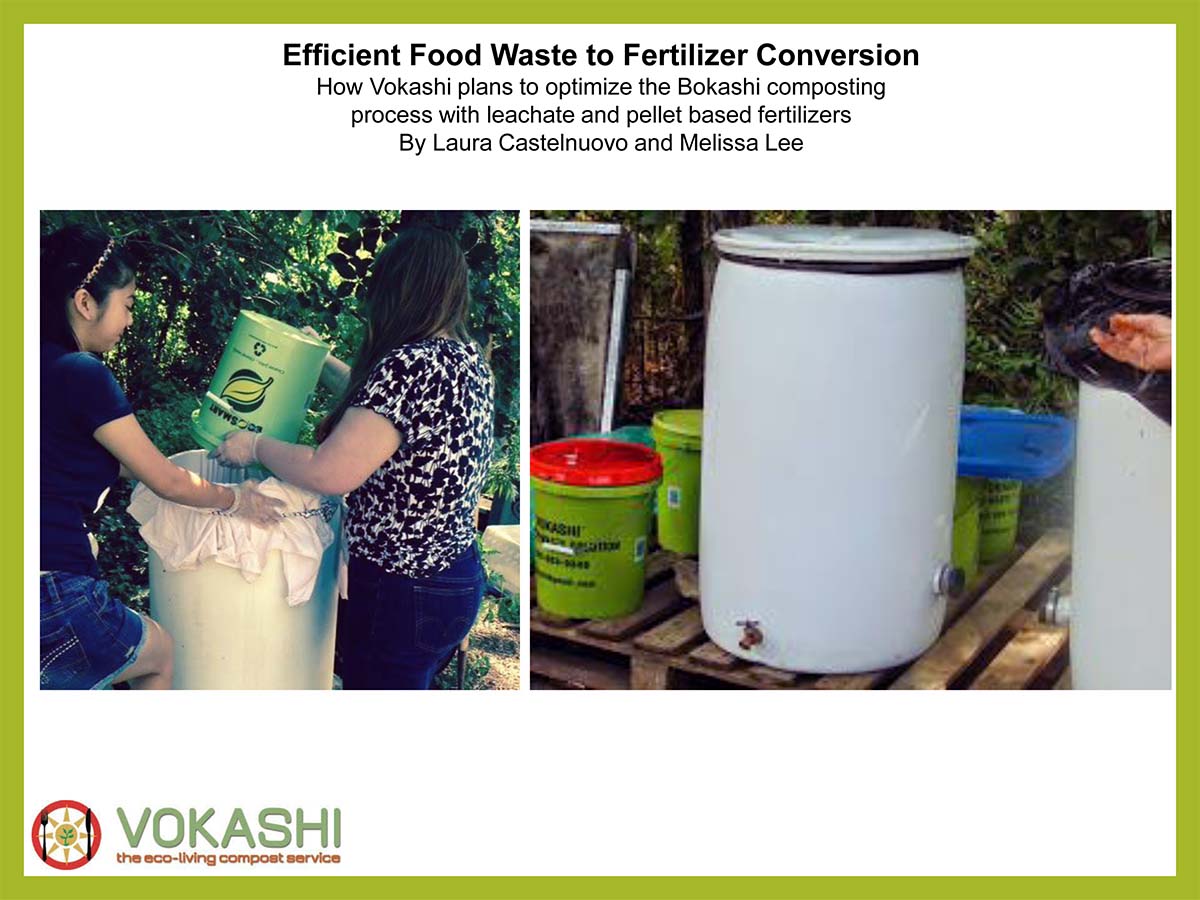
Vandra: “So another little experiment that I wanted to do a couple of years ago was around the leachate. The leachate has a lot of valuable nutrients in it. I observed that in these composting, and particularly above ground composting systems, what causes the smells is actually from the water and the water and the air–in my opinion, I don’t know it for sure but–it creates the odors. So what I wanted to do was to find out what was in the leachate so another student managed a research project which was to empty the fermented food waste into the white container and seal it and then drain the leachate.” Next Slide…
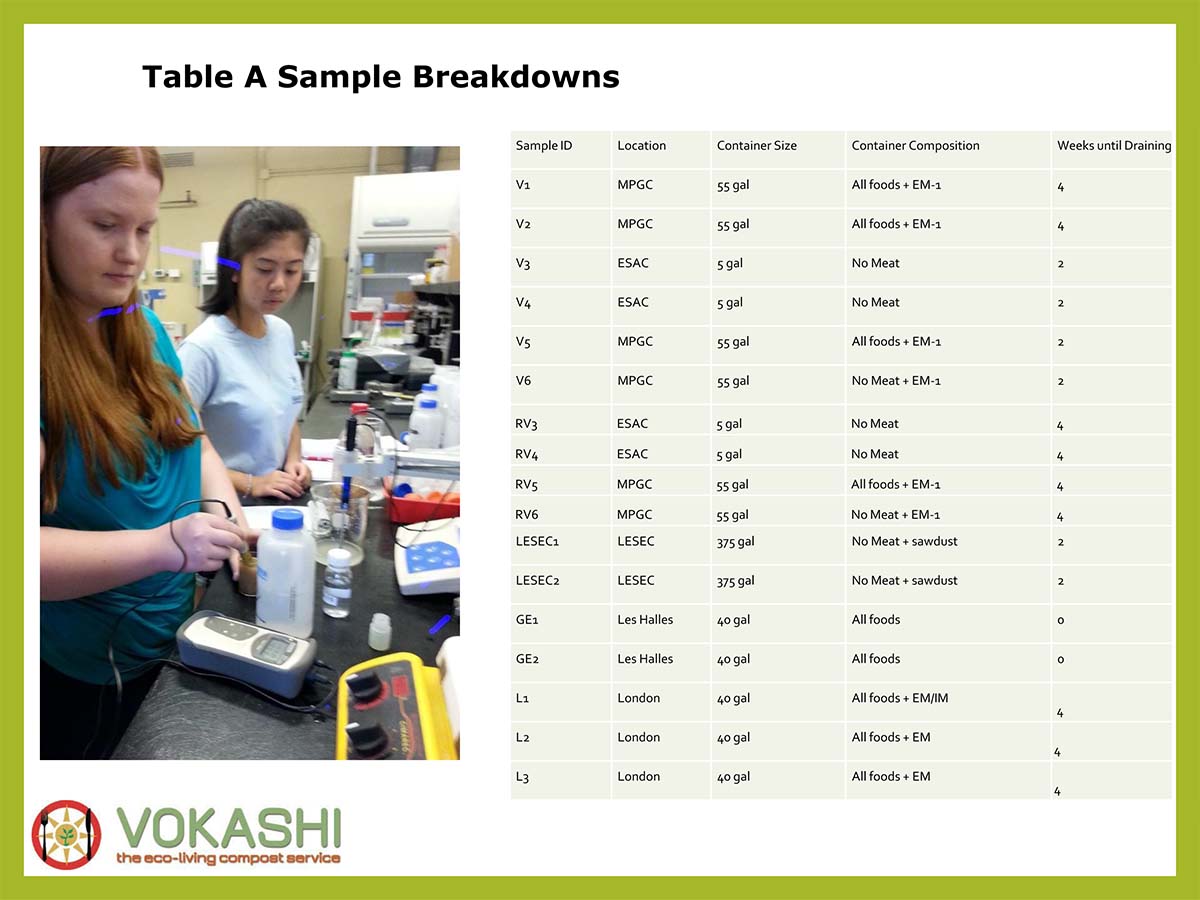
Vandra: “We did this with the help of two or three other composting initiatives like the Lower East Side Ecology Center and we got leachate from a restaurant that uses one of the industrial composting machines.” Next Slide…
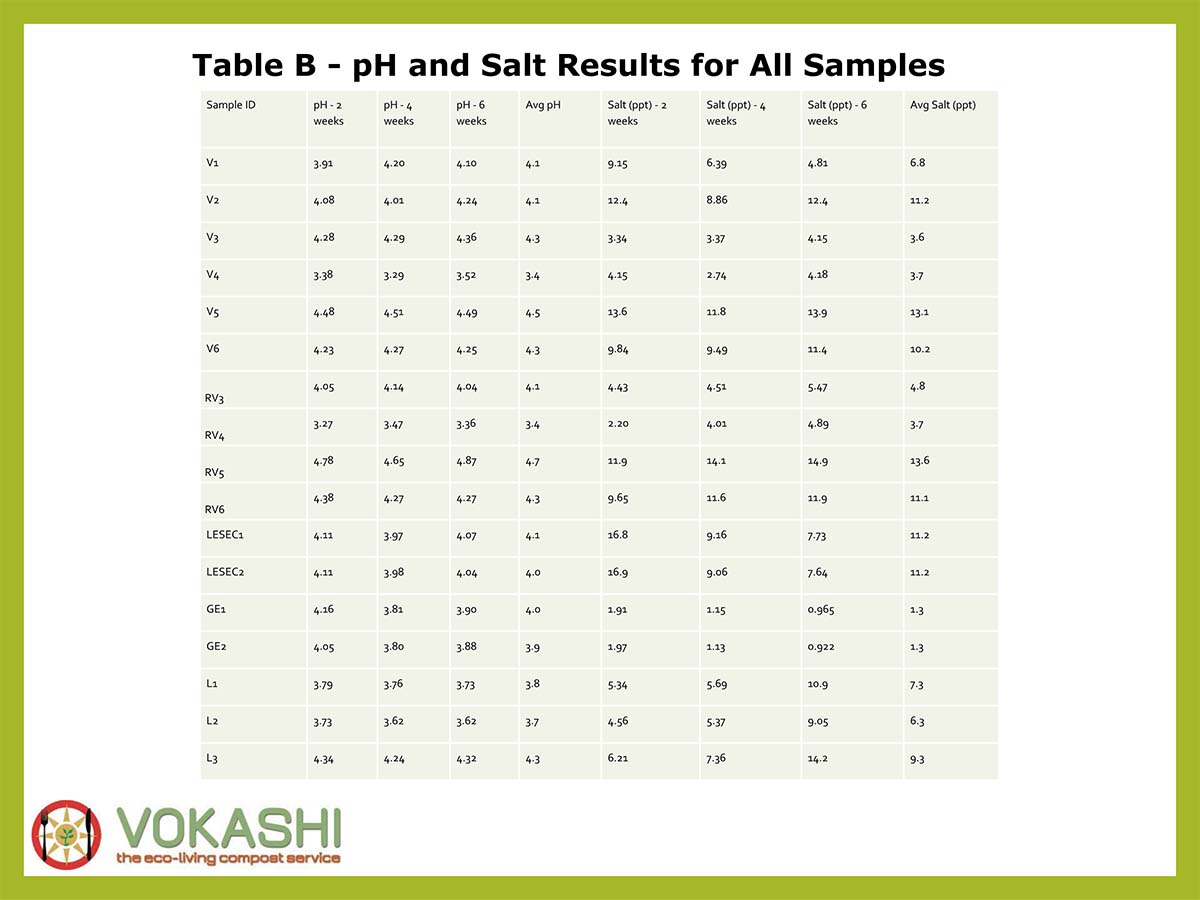
Vandra: “It was an important exercise to take us down the road to the importance of fertilizers and leachate as a fertilizer. And bear in mind that the fertilizers that are on the market like Miracle Grow or Scotts you know these are huge billion-dollar industries. So being able capture our leachate in the case of the golf course it would be great to use that because they are spending thousands of dollars on their chemical fertilizers. So the results of this exercise was really quite helpful in pointing out into that direction.” Next Slide…
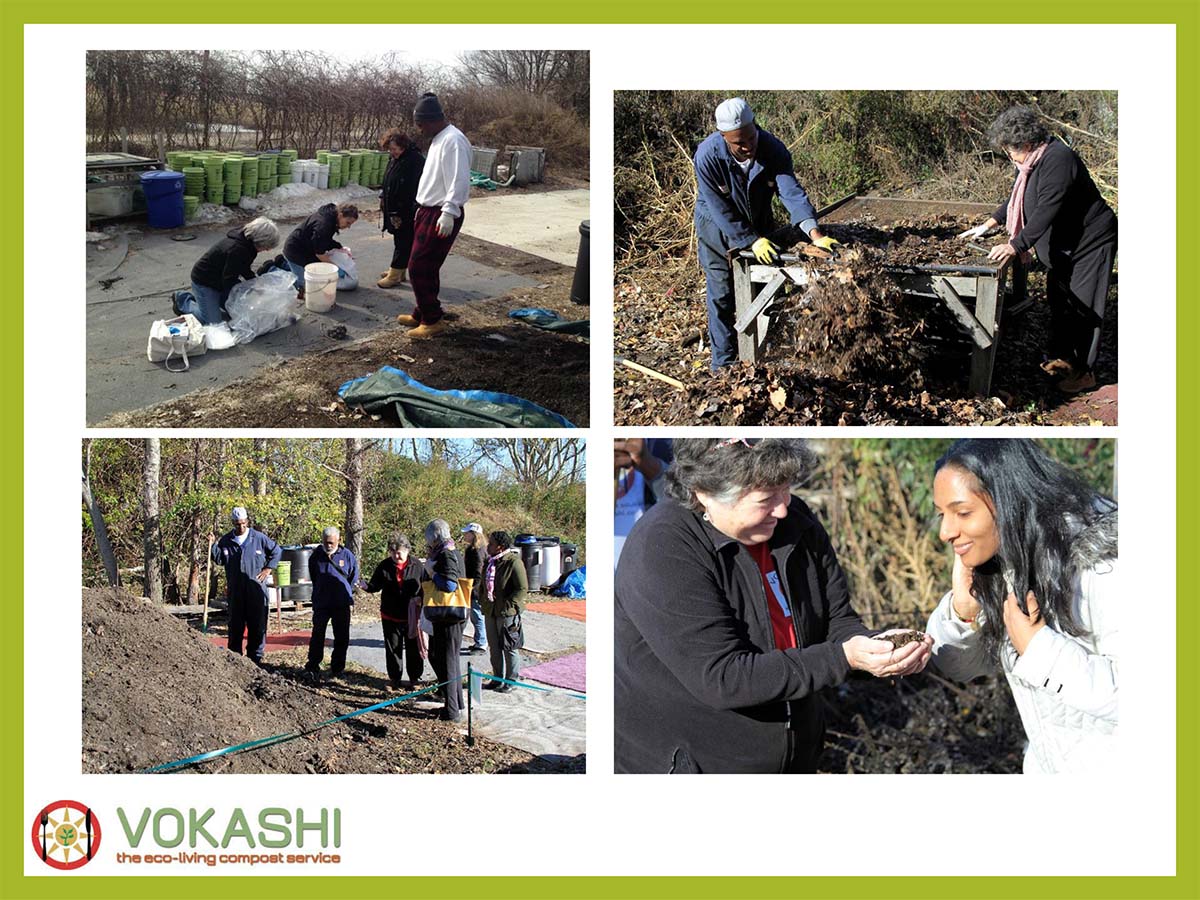
Vandra: “So we do the leachate and the next experiment we are part of is the Compost Analysis and Sample Study that was done in 2015 and the New York State DEC Cornell Waste Management Institute to take and test samples from ten of the community compost sites in New York. So, our compost got tested at the Cornell Waste Management Institute. The tested material was was excavated and and had been sitting on the side for about two months before it was sifted and then taken up to be tested.” Next Slide…
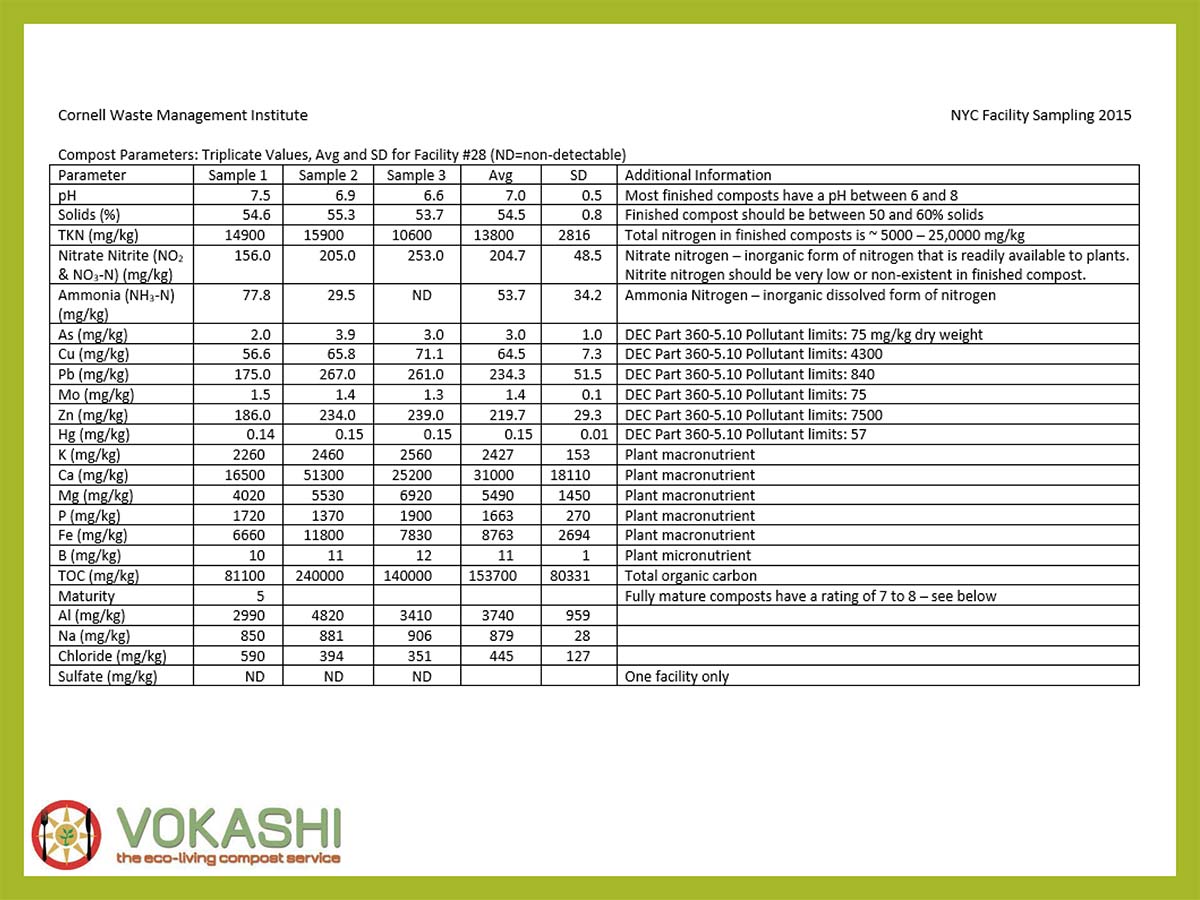
Vandra: “These are the results of our site. ” Next Slide…
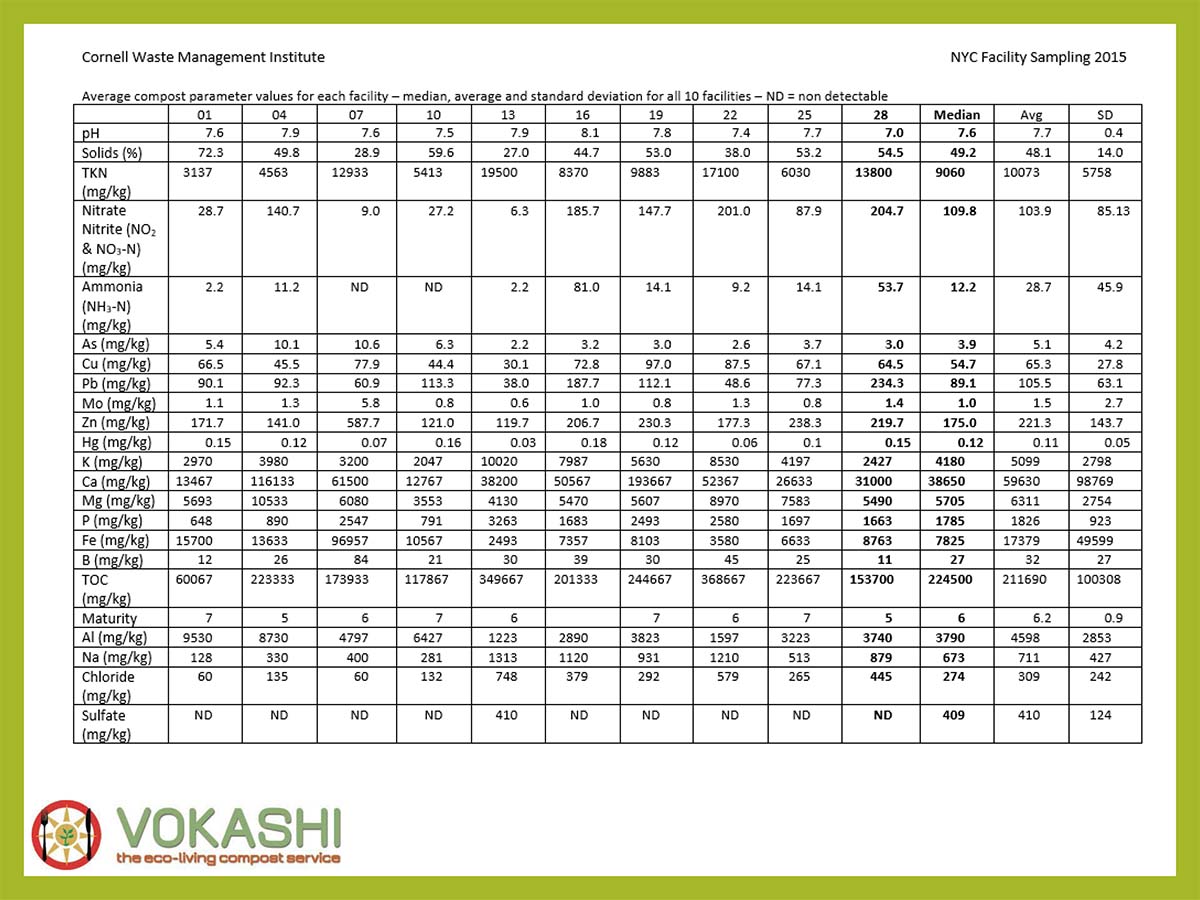
Vandra: “These are the results of all of the sites. And as you can see this is a huge endeavor but it is the sort of research that I personally think we as a business need to be doing regularly.” Next Slide…
Vandra: “Which sort of leads me to my final comments which are the need for popularizing Bokashi. There are many examples of Bokashi. In Asia and Europe there are biologists who are working hard to identify, tag and mark beneficial microorganisms for environmental cleaning jobs and we just need to collect more scientific data to share with Botanical Gardens and the composting research community. In fact I want to say that large part I’d like to see the Botanicals and the other Institutes actually take this on to help us lend more weight and validity to the process. So thanks very much for your attention.”
Brenda: “Thank you Vandra.
